

3.2 Million Learners at Risk: Why Bullying Prevention Must Start Early
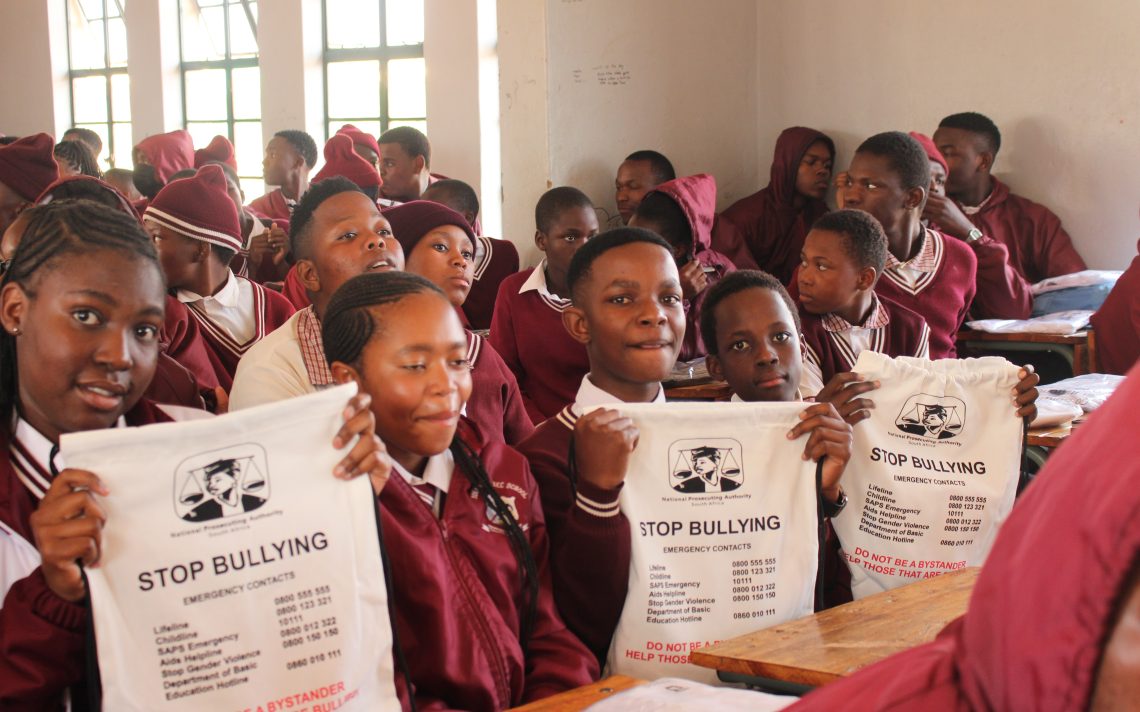
Safer South Africa Foundation and the National Prosecuting Authority honour learners from Mothimako and Ngwanalaka secondary schools for completing the Communities and Justice Programme
Today, the Safer South Africa Foundation (SSAF), in partnership with the National Prosecuting Authority’s Limpopo Provincial Office, recognised 193 learners from Mothimako Secondary School and Ngwanalaka Secondary School at a Communities and Justice Programme Certificate Award Ceremony in Polokwane.
Held under the theme “Prevention is Better Than Prosecution,” the ceremony celebrated learners who have completed a structured social crime-prevention programme designed to equip young people with practical knowledge of the criminal justice system, the consequences of unlawful behaviour and the life skills needed to make responsible decisions.

While the NPA is widely recognised for prosecuting crime and ensuring that offenders are held accountable, its participation in the programme demonstrates the equally important role that justice-sector institutions can play in preventing young people from entering the criminal justice system in the first place.
The partnership reflects a shared conviction that prosecution should not be society’s first opportunity to intervene in a young person’s life. Prevention must begin much earlier, in classrooms, families and communities, by helping young people understand their rights and responsibilities, recognise the consequences of harmful conduct and believe that safer, more positive futures are within their reach.
Responding to the realities confronting learners
The programme was implemented against the backdrop of serious social challenges affecting learners at both schools, including bullying, gangsterism and the pressures experienced by children growing up in child-headed households. Mothimako Secondary School is situated in the area where the high concentration of taverns has contributed to learners’ exposure to alcohol and substance abuse.
General Riah Phiyega, Chief Executive Officer of the Safer South Africa Foundation, said the programme recognises that meaningful crime prevention must begin long before a young person appears in court.

“By the time a young person enters the criminal justice system, several opportunities to guide, protect and support that child may already have been missed. Prevention asks us to act earlier; to enter the classroom, listen to young people and equip them with the knowledge, values and confidence to choose a different path.”
“These 193 learners are not merely receiving certificates. They are becoming ambassadors of safety, responsibility and positive change.”
Taking justice education beyond the classroom
An important component of the programme is experiential learning, through which learners engage directly with crime prevention and justice-sector institutions and professionals. These include the South African Police Services, the Provincial Traffic Department and the Department of Justice.
As part of this experience, the participating learners visited the Mankweng Magistrate’s Court, where they gained first-hand insight into court processes and the broader criminal justice system. The visit helped learners move beyond abstract classroom discussions and observe the serious legal and human consequences that can follow criminal conduct.
Direct exposure to the courts is particularly important in communities where crime and gangsterism may sometimes be romanticised or portrayed as symbols of power, belonging or material success. By seeing the justice system in practice, learners are encouraged to question these misconceptions and understand that their actions carry consequences for themselves, their families, victims and society.
The National Prosecuting Authority (NPA) plays an important role in educating students about the criminal justice system and empowering them to take responsibility for their actions. Through awareness and educational programmes, the NPA helps young people understand the consequences of criminal behaviour, their rights and responsibilities, and the importance of making positive choices. By promoting respect for the law and accountability, the NPA contributes to building responsible citizens and safer communities. The NPA will continue to partner with the Department of Basic Education, SAPS, and community structures to roll out similar programmes across the province.
Education about the criminal justice system can have a positive impact on youth behaviour in several ways:
- Promotes informed decision-making: Young people learn about the consequences of criminal activities, helping them think carefully before making choices that could lead to legal trouble.
- Encourages accountability: Understanding that actions have consequences motivates youth to take responsibility for their behaviour and decisions.
- Reduces risky behaviour: Awareness of laws and penalties can discourage involvement in crime, substance abuse, violence, and other harmful activities.
- Builds respect for the law: Learning how the justice system works helps young people appreciate the importance of following laws and respecting the rights of others.
- Develops positive values: Programmes often emphasise integrity, respect, self-discipline, and good citizenship, encouraging responsible conduct.
- Empowers youth to seek help: Students become more aware of available support systems and are more likely to seek guidance when facing challenges or peer pressure
“The NPA remains committed to working with schools, parents and communities to fight crime and promote a culture of accountability and respect for the rule of law”, said the Director of Public Prosecutions (DPP) Advocate Ivy Thenga.
The principal of Mothimako Secondary School, Mrs Sekital Marole welcomed the programme’s practical and preventative approach.
“Our learners face pressures that extend far beyond the school gates. Bullying, substance abuse, gangsterism and difficult family circumstances can affect their behaviour, confidence and ability to learn. This programme has given them a safe space to confront these realities, understand the consequences of their choices and recognise their own power to create positive change.”
“We are grateful to the Safer South Africa Foundation, the NPA and all the programme partners for investing in our learners. We believe the lessons they have gained will contribute to a safer, more respectful school environment and will continue to influence their decisions long after the certificate ceremony.”
By investing in these 193 learners today, the partners are helping to develop a generation that understands that true strength lies not in intimidation, violence or criminality, but in accountability, respect and the courage to choose a safer future.